
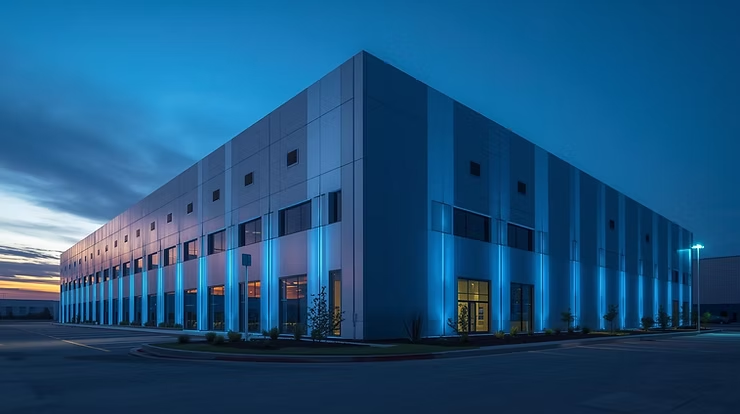
Cooling is one of the largest controllable costs in any data centre – and one of the most critical operational risks. Sensor drift, control conflicts, and inefficient sequencing can quietly waste energy, degrade PUE, and increase the risk of downtime, often long before alarms are triggered.
Real-World Impact: Energy, PUE & ROI
Industry deployments and academic research confirm the power of AI HVAC optimisation:
- Google applied machine learning across its data centres to optimise cooling controls. The results? ~40% reduction in cooling energy and ~15% improvement in PUE, all while maintaining full operational reliability.
- Huawei iCooling delivered 8–15% PUE improvements in commercial data centres by predicting cooling loads and optimising chiller and airflow performance.
- Fujitsu reported 15–20% energy savings through AI-controlled air conditioning, with plans to expand the approach across multiple sites.
Research supports these outcomes: AI-driven fault detection and predictive control can reduce cooling energy by 15–25%, while proactively identifying faults that would otherwise waste 5–30% of energy.
Financially, the benefits are tangible. By cutting energy use, reducing unplanned downtime by ~30%, and optimising existing systems, AI HVAC optimisation often delivers ROI within 6–12 months. Carbon emissions are reduced in parallel, with some deployments avoiding hundreds of tonnes of CO₂ annually – a material contribution to ESG goals.
Why It Matters
Cooling isn’t just a cost centre — it’s a strategic lever. With real-time intelligence and engineer-led insight, facilities teams can:
- Optimise chillers, CRAH/CRAC units, and airflow systems in real time
- Detect faults proactively, lowering downtime and SLA risk
- Reduce energy consumption and carbon footprint
- Move from reactive maintenance to performance-led operations
When combined with CIBSE-certified expertise, AI HVAC optimisation and FDD become more than just a tool – they deliver measurable operational advantage, financial savings, and sustainability outcomes.
Bottom Line:
AI-driven HVAC optimisation and FDD is transforming how data centres operate. The evidence is clear: lower energy use, improved PUE, fewer faults, faster ROI, and verified ESG impact. CSR Sustain UK brings the insight, intelligence, and engineering authority to turn this potential into real-world results.
nbsp;a 30-minute performance review with CSR Sustain and discover where hidden HVAC inefficiencies are costing your data centre.