Home   ›    Archive

NABERS in the North: regeneration of our great northern cities

NABERS in the North: regeneration of our great northern cities

NABERS in the North: regeneration of our great northern cities

Manchester, Leeds, and Sheffield have seen huge makeovers, turning old industrial spots into lively, modern spaces. Manchester’s New Islington and East Manchester projects brought in new homes, parks, and businesses, while Leeds’ Granary Wharf transformed the waterfront into a buzzing area. Plans like the Elland Road expansion are set to add even more energy to the city.

Sheffield’s regeneration is just as exciting, with the Park Hill Flats getting a fresh new look and the Heart of the City project creating cool new places to work and shop. Across all three cities, the focus is on making them greener, more connected, and better places to live, work and visit.

Let’s take a look at what NABERS rated buildings are part of the North’s regeneration.

NABERS Buildings in the North of England


Toronto Square, Leeds


Toronto Square was the first office building in the UK to receive a NABERS rating. This existing building, owned by Grosvenor, achieved a Energy rating after 12 months of monitoring. The certification highlights its efficient operation and sets a benchmark for other commercial properties in Leeds and beyond.

Find out more about Toronto Square


4 Angel Square, Manchester


Part of the NOMA development, 4 Angel Square is targeting a five-star NABERS rating. Designed to be net-zero in operation, the building also boasts a BREEAM Outstanding rating and an EPC A certification. The project serves as an example of how new office developments can align with sustainability targets from the outset.

Find out more about 4 Angel Square 


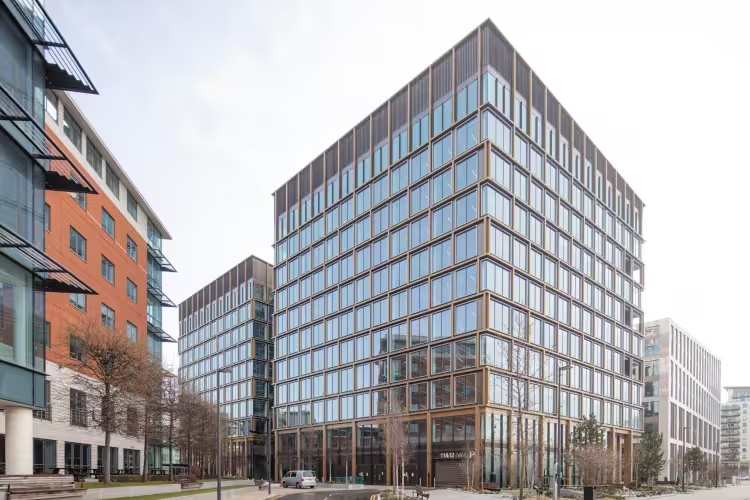
11 & 12 Wellington Place, Leeds

Developed by MEPC, 11 & 12 Wellington Place is the first office development outside London to achieve a five-star NABERS UK Design for Performance rating. The project prioritizes operational energy efficiency, providing a model for other developers looking to integrate NABERS into their building strategies.

Find out more about 11 & 12 Wellington Place


Elshaw House, Sheffield


Elshaw House, located in Sheffield’s Heart of the City development by Queensberry Real Estate, has achieved a five-star NABERS UK rating, placing it among the top 1% of office buildings in the country for energy efficiency. Designed as a net-zero carbon-ready building, it offers 70,000 sq ft of flexible workspace and features a BREEAM ‘Excellent’ rating alongside an EPC A certification.

Find out more about Elshaw House


Eden, New Bailey, Salford

Eden in New Bailey, Salford, is a £36 million office development that secured a 5.5-star NABERS ‘Design Reviewed’ Target Rating. As the first new-build in the UK to attain this rating, it sets a precedent for sustainable office design in the region. The building incorporates cutting-edge energy-efficient technologies to reduce carbon emissions

Find out more about Eden New Bailey


NABERS: Bridging the Performance Gap

At CSR we work with portfolio owners and managers to close the performance gap of buildings from design to energy in use. Through our partnership with CIM, the Australian real-time building analytics SaaS solution provider (Peak) and our expert HVAC advisory, the UK now has the real opportunity maintain and increase energy in use NABERS ratings, through HVAC optimisation.

If you would like to know how HVAC Optimisation will drive sustainability ratings, save further energy and carbon emissions get in touch for a chat or book a discovery call today.

Kevin Daly – kevin@csrsustain.co.uk 
book a discovery call

Credit with links: Toronto Square | 4 Angel Square| 11 & 12 Wellington Place | Elshaw House | Eden New Bailey
Manchester Leads on EPC ratings – but there is a mountain to climb to reach 2030 targets

Manchester Leads on EPC ratings - but there is a mountain to climb to reach 2030 targets

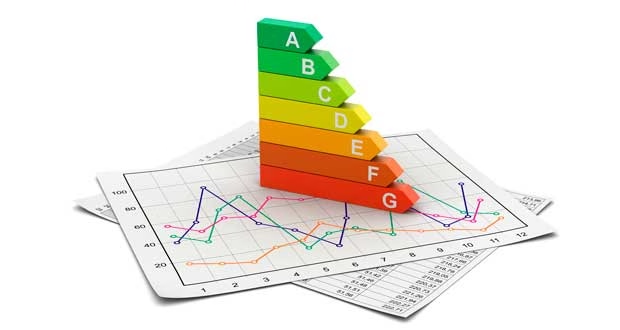
Over 80% of Commercial Real Estate in Major English Cities Falls Below EPC ‘B’ – Manchester Leads on Efficiency

New research confirms that more than four out of five commercial buildings in England’s biggest cities are below the energy performance threshold of EPC ‘B’, underlining a huge retrofit challenge ahead

In Manchester, which tops the rankings, only 20% of commercial properties have an Energy Performance Certificate (EPC) rating of A or B, meaning 80% are below a ‘B’ rating. Other major cities perform even worse, reflecting a nationwide trend of low building energy efficiency amid slow policy progress.

According to analysis by the British Property Federation (BPF), 83% of commercial buildings in seven major English cities are rated below EPC B. Manchester has the highest share of energy-efficient stock, with 20% of its commercial buildings rated A or B (the top two bands). By contrast, cities like Birmingham and Bristol see only 15% of commercial space at A or B – meaning 85% of their buildings fall short of a ‘B’ rating

The full league table of the BPF’s city analysis is:

  • Manchester – 20% of commercial buildings have EPC A or B
  • London – 19% A or B
  • Leeds – 18% A or B
  • Liverpool – 18% A or B
  • Newcastle – 16% A or B
  • Bristol – 15% A or B (joint lowest)
  • Birmingham – 15% A or B (joint lowest)

Even Manchester’s relative “lead” still translates to a vast amount of inefficient space. Over 10 million square meters of Manchester’s commercial real estate is below EPC B, equivalent to about 83 Arndale shopping centres in floor area

Across the seven cities, reaching EPC B for all by the end of this decade would require retrofitting an estimated 94,600 m² of commercial space per day for the next five years a herculean task by any measure. The BPF says this underscores the scale of the challenge facing the property sector as it strives to improve building efficiency amid uncertain regulatory direction.

These city figures align with broader market data showing the predominance of low-rated stock. For example, 87% of UK office space is rated EPC ‘C’ or below, representing over 1 billion sq. ft. (92.9 million m²) of floor space that would need upgrading to achieve a ‘B’ rating. Such statistics make clear that most commercial assets are far from compliant with the potential future minimum standards, and that Manchester’s 20% A/B share, while the highest, is still modest in absolute terms.

Luke Cleary, Technical Director, CSR Sustain, comments:

“From our on-the-ground experience working with commercial property owners, we’ve seen first-hand both the challenges and the massive opportunities in improving EPC ratings. Our team has been helping clients identify practical retrofit strategies mainly through wide-scale electrication of property assets, addressing the carbon intensity at the source. While Manchester’s leading position underscores the region’s commitment, there’s still a major uphill climb across all UK cities. Our insight is that real progress hinges on collaborative effort, clear policy direction, and consistent investment so that all stakeholder, landlords, tenants, and service providers, can confidently embark on long-term, energy-focused building upgrades.”

Origin post: Manchester’s commercial buildings top the league table in EPC ratings

CSR Sustain partners with CIM: Introducing PEAK, AI-Powered HVAC Optimisation

Introducing PEAK - AI-Powered HVAC Optimisation

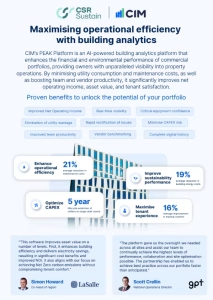
CRS Sustain, an energy and engineering consultancy specialising in HVAC optimisation and advisory, are proud to be the official UK partner of CIM, bringing their internationally renowned, best-in-class AI platform, PEAK, to the UK.

Proven to reduce operational energy consumption and carbon emissions by up to 30%, PEAK is transforming building performance worldwide. Developed in Australia with the help of our Technical Director, Luke Cleary, PEAK is already revolutionising building management in the US, Asia, the Nordics, and the EU. Now, it’s set to redefine energy efficiency in the UK.

Maximising operational efficiency with building analytics

PEAK at a Glance:

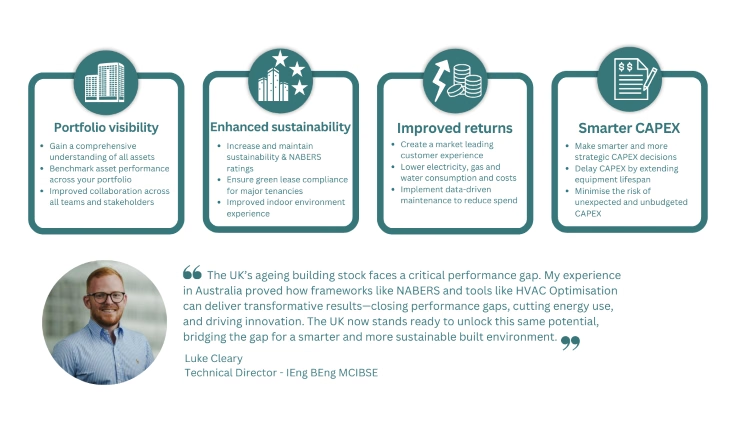
✅ Seamlessly integrates with a building’s BMS, creating AI-driven optimisation rules
✅ Delivers energy and carbon savings within weeks through data-driven maintenance
✅ Requires no upfront CAPEX investment
✅ Provides a clear return on investment within months
✅ Proven to reduce operational energy and carbon emissions by up to 30%
✅ Supports and enhances NABERS Energy ratings for office buildings

At CRS Sustain, we are committed to helping you unlock the full potential of your building’s performance with cutting-edge technology and expert advisory services.

Book your no obligation discovery call here

For further information contact, Kevin Daly on 0161 762 5670 or kevin@csrsustain.co.uk 


Unlocking the benefits to HVAC Optimisation

City of London Emphasises NABERS UK Ratings in New Sustainability Guidance

City of London Emphasises NABERS UK Ratings in New Sustainability Guidance

City of London Emphasises NABERS UK Ratings in New Sustainability Guidance

The City of London Corporation’s Planning and Transportation Committee has approved the new Planning for Sustainability Supplementary Planning Document (SPD), which highlights the importance of NABERS UK ratings in achieving the City’s sustainability goals. This document, set to be adopted in the coming weeks, offers specific guidance on sustainable design and construction practices, particularly focusing on energy efficiency benchmarks to support the City’s goal of achieving net zero by 2040.

Key Focus: NABERS UK Ratings

A major aspect of the new SPD is the incorporation of NABERS UK ratings, a sustainability performance measurement system for office buildings:

  • New office developments should target a 5-star NABERS UK rating.
  • Retrofitted office spaces are expected to achieve at least a 4-star NABERS UK rating.

This ensures that both new and existing buildings contribute to reducing whole life-cycle carbon emissions and operational energy use.

Additional Sustainability Themes in the SPD:

  1. Retrofit and Reuse – Encourages repurposing existing buildings to align with the City’s ‘Retrofit First’ approach.
  2. Greenhouse Gas Emissions and Energy Use – Focuses on achieving high NABERS UK ratings to enhance energy efficiency.
  3. Circular Economy – Advocates for minimising waste by transitioning to a circular waste model for building construction and operation.
  4. Climate Resilience – Addresses flood risk management, urban overheating, water management, pest and disease control, and infrastructure resilience.
  5. Urban Greening and Biodiversity – Promotes the protection and enhancement of biodiversity, habitats, and green infrastructure in the Square Mile.

Stringent Carbon Benchmarking and Offsets

  • Embodied carbon benchmarking is introduced, aligning with Greater London Authority standards.
  • If developments do not meet embodied carbon benchmarks, they must compensate by delivering additional sustainability benefits, such as enhancing local energy networks, improving public spaces, or investing in climate resilience infrastructure.

Leadership in Global Sustainable Development

Shravan Joshi, Chairman of the Planning and Transport Committee, emphasized that this initiative is a significant step toward decarbonisation while reinforcing London’s status as a leader in sustainable commercial development. He noted that the Square Mile continues to attract top businesses, innovators, and global talent by setting the pace for sustainable design through the adoption of NABERS UK ratings and beyond.

Luke Cleary, Technical Director, CSR Sustain, comments:

“The City of London’s adoption of NABERS UK is a hugely positive step, recognising the success this rating framework has had—and continues to have—in Australia in driving operational efficiency. At CSR Sustain, we are hopeful that this sets a precedent for wider adoption across the UK, particularly in the Private Rented Sector (PRS), where robust operational benchmarking could play a key role in improving energy performance and reducing carbon emissions at scale.”

Origin post :City of London Corporation raises sustainability bar for developers

Elevating Energy Performance for Marchmont’s Portfolio

Elevating Energy Performance for Marchmont’s Portfolio

Partnership Wins
  • 175 buildings benchmarked, enabling a baseline understanding of current asset performance. 
  • 81 buildings received detailed retrofit advice, tailored to achieve MEES compliance in advance of 2030. 
  • 17 buildings certified as achieving a B rating, with plans for further certifications as additional works are completed. 
  • Calculated -72% Energy Consumption Reductions: 3,035,290 kWh 
  • Calculated -83% Carbon Emissions Reductions: 586,301 kgCO2 
Background 

Marchmont, a distinguished property portfolio manager, partnered with CSR Sustain to improve energy performance across their extensive portfolio of industrial and office buildings. The project aimed to achieve compliance with MEES regulations by elevating building EPC ratings to a minimum of B, well ahead of the 2030 deadline. 

Project Scope and Approach 

Portfolio Benchmarking
CSR Sustain conducted energy performance benchmarking for 175 buildings, which initially ranged from EPC ratings of C to G. This provided a comprehensive understanding of the energy efficiency status and highlighted priority areas for improvement. 

MEES Retrofit Pathway Advice
CSR Sustain developed bespoke retrofit pathway advice for 81 buildings, outlining strategies to achieve a B rating. These pathways addressed both operational inefficiencies and specific challenges unique to the portfolio. 

Post-Completion Certification
Following the implementation of upgrade works, 17 buildings were successfully certified as achieving a B rating, meeting MEES compliance and Marchmont’s sustainability objectives. 

Key Challenges and Solutions 

Marchmont’s portfolio posed unique challenges due to the nature of its properties: 

Industrial Sites with High Heating Demand
The portfolio included primarily warehouses with gas convection heaters and office amenities reliant on gas boilers and radiators. Both systems were energy-intensive and inefficient. 

Cost Constraints on Fabric Upgrades
Fabric improvements, such as insulation or glazing upgrades, were deemed impractical due to high capital costs and minimal impact on EPC ratings. 

Varying Building Characteristics 

No two buildings are the same, with differences in building ages, fabric, business activities, and types of existing HVAC plant. These factors significantly influenced how CSR Sustain approached MEES advice, requiring tailored solutions to find the most cost-effective path to achieve a B rating for each property. 

To overcome these challenges, CSR Sustain implemented innovative solutions: 

  • Electrification of Heating: Gas heating systems were replaced with air-source heat pumps in office amenities and localised electric radiant panels in warehouses. 
  • Lighting Upgrades: Inefficient lighting systems were replaced with LED technology throughout all spaces. 

These strategic interventions significantly enhanced energy performance while adhering to budget constraints. 

Lessons Learned 

Tailored Solutions for Industrial Portfolios: Electrifying heating systems and prioritising lighting upgrades proved critical in addressing the unique challenges of industrial properties. 

Value of Early Action: Starting compliance planning early enabled Marchmont to make incremental, cost-effective improvements across its portfolio. 

Focus on Practicality: Avoiding high-cost, low-return upgrades ensured efficient allocation of resources while meeting MEES requirements. 


UK Government Proposes Key Reforms to the Energy Performance of Buildings Framework

UK Government Proposes Key Reforms to the Energy Performance of Buildings Framework

UK Government Proposes Key Reforms to the Energy Performance of Buildings Framework

The UK government has launched a consultation to reform the Energy Performance of Buildings (EPB) framework. The proposed changes aim to modernise regulations, enhance energy efficiency, and support national goals such as achieving net-zero emissions by 2050, reducing fuel poverty, and improving building standards.

Running until 26 February 2025, this consultation invites stakeholders to provide feedback on changes to Energy Performance Certificates (EPCs), Display Energy Certificates (DECs), and Air Conditioning Inspection Reports (ACIRs).

Key Highlights of the Consultation

Modernising EPCs – The consultation outlines updates to EPCs, which are crucial tools for assessing and improving building energy performance.

Reducing the Validity Period of EPCs:

  • EPCs are currently valid for 10 years, but the government proposes shortening this to 5 years (or less) to ensure updates reflect building upgrades, evolving policies, and technological advancements.
  • A reduced validity period will ensure that prospective buyers and tenants have accurate, up-to-date information to support decision-making on energy efficiency improvements.

Requiring Valid EPCs Throughout Tenancies:

  • A proposed trigger point would mandate EPC renewal upon expiry, even if a tenancy is ongoing. This ensures tenants always have up-to-date energy performance data and aligns with Minimum Energy Efficiency Standards (MEES) policies.

Updated EPC Metrics

To address the limitations of the current Energy Efficiency Rating (EER), the government proposes adopting a multi-metric approach for domestic buildings, including:

  • Fabric performance: Evaluating insulation and thermal efficiency.
  • Heating system efficiency: Assessing the environmental impact of heating systems.
  • Smart readiness: Measuring the integration of energy-saving technologies.
  • Energy cost metrics: Providing clearer predictions of energy expenses.

For non-domestic buildings, the carbon metric will remain the primary measure, but additional indicators may be considered.

Strengthening Compliance

To improve adherence to energy performance regulations, the government proposes the following:

Increased Penalties – Penalties for non-compliance will rise to reflect inflation, with fines for domestic EPCs increasing from £200 to £325–£400, and for non-domestic EPCs adjusted to £815–£10,000, depending on building size.

Expanded Scope – EPC requirements will extend to short-term rental properties and heritage buildings, ensuring consistent standards across all property types.

Data Accuracy and Quality Assurance

Efforts to improve data reliability and assessment quality include:

  • Enhanced training and accreditation for energy assessors.
  • Allowing re-use of validated data from previous EPC assessments for minor property upgrades.
  • Removing outdated or cancelled EPCs from the register after two years to streamline data management.

Air Conditioning Compliance

Proposals aim to improve compliance with ACIR requirements by:

  • Increasing penalties for non-compliance from £300 to £800.
  • Simplifying and redesigning ACIRs to make recommendations clearer and more actionable for building operators.

What These Changes Mean for Stakeholders

For Homeowners and Tenants

  • More frequent, reliable EPC updates for informed decision-making.
  • Clearer insights into energy savings and improvement opportunities.

For Landlords and Businesses

  • Enhanced tools for compliance management and portfolio improvement.
  • Stronger alignment with Environmental, Social, and Governance (ESG) goals.

For Policymakers

  • Improved data for monitoring energy performance across the UK building stock.
  • Stronger alignment with decarbonisation and energy efficiency objectives.

Have Your Say

The government encourages all stakeholders—homeowners, tenants, landlords, energy assessors, and businesses—to share their views via the online survey. Your feedback will help shape a future-proof EPB framework.

CLICK HERE FOR LINK TO SURVEY

Take this opportunity to influence the future of building energy performance in the UK. Together, we can build a sustainable, low-carbon future.

Bridging the Performance Gap: Lessons from Australia for the UK’s Built Environment

Bridging the Performance Gap - Lessons from Australia for the UKs Built Environment

Luke Cleary, IEng MCIBSE, Technical DirectorLuke Cleary – IEng MCIBSE
Technical Director
luke@csrsustain.co.uk

The UK’s Building Efficiency Challenge: A Personal Perspective

The UK’s ageing building stock lacks modern technology adoption, leading to buildings underperforming against their original design intent. However, solutions to bridge this gap exist—solutions I experienced firsthand in Australia.

In Australia, I worked for a data analytics company, optimising property operations through advanced analytics, and a client-side consultancy, where I led the design and project management of HVAC infrastructure retrofit upgrades. These roles provided me with personal and valuable insight into how CAPEX and OPEX projects, supported by frameworks like NABERS, can drive significant operational improvements in the existing built environment.

Since returning to the UK, I’ve observed a noticeable gap in addressing these challenges. The tools, strategies, and frameworks that proved so effective in Australia are only beginning to gain traction here, leaving untapped potential to transform the UK’s built environment.


NABERS: Transforming the Australian Property Sector

In Australia, I saw how NABERS became a driving force for change. Its emphasis on measurable performance outcomes and transparent reporting compelled organisations to adopt smarter, data-driven approaches to improve their energy efficiency.

This environment was the perfect testing ground for innovation and change in this field, and I first hand experienced the following transformation.

  1. Cultural Shift Towards Innovation: NABERS created a culture of accountability and innovation, encouraging the adoption of cutting-edge technologies to meet stringent environmental and operational standards.
  2. Adoption of AI and Machine Learning: Leading property owners embraced AI-driven tools to make better-informed decisions about their existing infrastructure, enhancing efficiency and extending the lifecycle of assets.
  3. Focus on Business Outcomes: Maintenance strategies became more aligned with business goals, prioritising performance, sustainability, and cost-effectiveness over traditional compliance-focused approaches.
  4. Contractor Evolution: Initial resistance from contractors transformed into widespread adoption as they realised these tools streamlined processes, improved fault management, and generated additional revenue from proactive services.
  5. Shift to Proactive Management: Facilities managers moved from reactive maintenance to proactive, data-driven management of building systems, aligning with measurable performance outcomes.
  6. Transition to Data-Driven Contracts: Tier 1 property owners reimagined their mechanical and BMS controls maintenance contracts, shifting away from traditional planned preventive maintenance (PPM) to contracts informed by real-time data and analytics.
  7. Cost and Energy Savings: Significant reductions in energy consumption and operational costs were achieved, contributing to sustainability and bottom-line improvements.
  8. Improved NABERS Ratings: Buildings significantly enhanced their NABERS ratings, with some improving from 2-star to 6-star performance, driven by better operational insights and fault detection.

NABERS acted as a catalyst, accelerating the adoption of innovative technologies and creating an environment where data-driven solutions could thrive and deliver measurable success. This exemplifies how regulatory frameworks can drive both innovation and tangible results.


The UK’s Opportunity to Bridge the Gap

The UK faces unique challenges in improving building performance. Much of its ageing building stock relies on systems that were never designed with modern energy efficiency in mind. Compounding this issue, regulations are fragmented, and some proposed measures have either been overlooked or remain unratified.

Notably, the UK government has delayed action on a 2019 consultation proposing a similar framework to successful initiatives like NABERS UK or Display Energy Certificates (DECs), leaving it unratified. This hesitation undermines progress toward achieving greater energy efficiency and sustainability in the UK’s built environment, leaving a critical gap in addressing these challenges for the existing building stock.

While some organisations are early adopters of tools like NABERS UK, their use remains voluntary at this stage, with steady growth anticipated. Widespread adoption is expected to accelerate once the government decides on a standardised framework for disclosing operational performance, whether NABERS UK or DECs. At that point, making such frameworks mandatory rather than voluntary will likely drive broader industry compliance and adoption.

However, this gap presents a profound opportunity. With net-zero targets becoming a priority, the UK is primed for intelligent building analytics to take centre stage. The early adoption of NABERS UK is an encouraging sign, but we need more widespread commitment to innovation and data-driven decision-making.

In my view, the UK’s building sector is at a tipping point. If organisations embrace tools like our HVAC Optimisation, they could see the same transformative benefits I witnessed in Australia—optimising HVAC infrastructure and bridging the performance gap for existing commercial properties.

Don’t just take my word for it—check out the BBP framework, which emphasises the importance of HVAC optimisation and prioritising system performance through advanced management techniques to drive operational excellence.


Lessons Learned from Australia

Working with cim.io gave me invaluable insights into the power of innovation. One of the most significant lessons was the importance of aligning technology with market needs. CIM’s success wasn’t just about its cutting-edge features; it was about how well those features addressed NABERS-driven challenges in the Australian market.

For instance, I was directly involved in designing machine learning AI algorithms that formed the backbone of CIM’s automated fault detection and diagnosis (AFDD) feature. The automated fault detection and diagnosis capability was key to identifying faults in real time and addressing them proactively to prevent energy wastage. Beyond this, I critically evaluated existing and outdated control strategies, redefining and implementing optimised approaches that improved operational efficiency, reduced energy consumption by up to 30%, and significantly enhanced NABERS ratings. Seeing these transformative results first-hand was truly a career-defining moment for me.


How CSR Sustain Is Leading the Way

At CSR Sustain, we’ve adopted these lessons and intend to lead the way in the UK by partnering with CIM and incorporating the PEAK tool into our energy management offering. PEAK provides advanced fault detection, operational insights, and measurable performance improvements—all designed to proactively transform the facilities management of commercial property infrastructure.

For forward-thinking organisations looking to streamline their operations and benefit from the operational performance incentives, our HVAC Optimisation is a game-changer. By integrating this tool into our suite of services, we are helping clients unlock the potential of intelligent building analytics.

Our goal is to bridge the performance gap in the UK by offering solutions that are both innovative and practical. Our expertise extends to guiding the adoption of AI tools for infrastructure optimisation, achieving significant energy and cost savings, and fostering a culture of innovation. We work closely with contractors, facilities managers, and ESG managers to streamline processes and align maintenance strategies with business goals. This collaborative approach establishes streamlined operations, avoiding energy wastage, and encouraging greater operational efficiency across entire portfolios.


The Future of Building Management

The question isn’t whether the UK can replicate Australia’s success with intelligent building analytics—it’s how soon. I believe the industry is on the verge of a significant overhaul that will include:

  • Leveraging data-driven insights where automated fault detection and diagnosis uncovers inefficiencies and optimises existing infrastructure.
  • Reshaping contractor management to drive accountability and operational efficiency.
  • Transitioning from planned-preventative (PPM) to data-driven maintenance (DDM) for smarter, proactive management.
  • Reducing energy consumption by up to 30%, improving energy and carbon accounting.
  • Boosting NOI for commercial property assets, adding measurable value for owners and investors.

These shifts will redefine the way the UK manages its built environment, bringing substantial benefits across performance, sustainability, and financial outcomes.


Luke Cleary – IEng MCIBSE
Technical Director
luke@csrsustain.co.uk

Cost-Saving Strategies: Improving Your Commercial Property’s Operational Energy Performance

Cost-Saving Strategies: Improving Your Commercial Property’s Operational Energy Performances

In various building contexts, opportunities for enhancing energy efficiency exhibit a diverse range, encompassing everything from modifying behaviours to implementing procedural adjustments and undertaking significant capital investments. Asset managers, property managers, and facilities managers, along with occupants, each hold interest and responsibility in distinct types of energy-saving strategies.

Exploring energy efficiency options entails considering multiple facets:

Stage 1: Identifying Efficiency Enhancement Opportunities

Approaching the identification process depends on factors like asset type, data availability, installed technology, and budget constraints. For limited budgets, options include reviewing existing Planned Preventative Maintenance (PPM), benchmarking energy usage, and seeking simple plant operation reviews. Alternatively, more extensive reviews could involve Building Management System assessments, sustainability audits, or consultations with Mechanical and Electrical (M&E) consultants.

Stage 2: Prioritising Recommendations

Given the likelihood of multiple recommendations emerging from efficiency reviews, prioritisation becomes crucial. Factors such as implementation ease, cost, payback period, and expected savings should guide this evaluation.

Stage 3: Determining Funding Mechanisms

Deciding on funding sources for capital-intensive recommendations involves assessing factors like payback periods and alignment with corporate sustainability objectives. Options may include asset manager funding, service charge allocations, or governmental grants for specific initiatives.

The UK government offers various incentives for energy-efficient upgrades. These incentives can significantly offset the initial costs of implementing energy-saving measures. Staying informed about these opportunities can help in planning your investment in energy efficiency.

Private – https://www.gov.uk/guidance/find-funding-to-help-your-business-become-greener

Public – https://www.salixfinance.co.uk/

Charity – https://www.gov.uk/guidance/vcse-energy-efficiency-scheme

Stage 4: Implementing Efficiency Enhancements

Identifying and instructing the appropriate parties for executing efficiency improvements is vital. This could entail procuring contractors for capital works or engaging communication and human resource teams for behaviour change initiatives.

Stage 5: Monitoring and Reporting Impact

Monitoring energy data pre- and post-implementation of improvement projects allows for baseline creation and impact assessment, facilitating informed decision-making and stakeholder engagement.

Examples of Energy Efficiency Improvement Opportunities:

A wide array of areas supports energy efficiency endeavours, including:

Plant

  • Review existing settings:
    • Review the plant run times to ensure that meet the occupational requirements of the building.
    • Review the dead-bands on the air handling units.
    • Adjust chilled water to run at 7°C flow and 13°C return (an increase of 1°C).
  • Increase the zoning capabilities of the building services.
  • Replace fans with direct drive (no belts).
  • Increase the frequency at which the air filters are changed.
  • Install CO2 sensors to the air handling units so that they can run on demand when required (room mounted sensors are often recommended over duct mounted sensors).
  • Install a smart building system the building operation can be monitored remotely – some systems also allow for settings to be changed remotely.

Fabric

  • Replace single glazed windows with double or triple glazed windows.
  • Where it is not feasible to replace single glazed windows consider installing secondary glazing.
  • Apply solar control film to windows to reduce solar gain and winter heat loss.
  • If you are carrying out refurbishment works determine whether additional insulation can be installed.
  • Install draught proofing doors between conditioned and un-conditioned spaces.

Equipment

  • Replace existing lighting with LED or energy efficient lighting.
  • Consider using lower overall ambient light levels, along with task lighting at individual desks.
  • Install PIR sensors to control the lighting.
  • Install daylight sensors to control external lighting.
  • When replacing existing equipment consider energy efficient alternatives.
  • Utilise energy saving features on existing equipment- such as allowing the lights within lifts to turn off when not in use, and for them to run slightly slower.

Monitoring

  • Install AMRs to ensure the data collected is accurate.
  • Ensure there is sufficient sub-metering in place to identify where there are high loads.
  • Install AMR sub-meters where possible.

Behaviour Change

  • Make the energy consumption of the building visible to building occupiers and users- this could be done via a screen display, energy reports, or operational performance certificates.
  • Introduce signage to promote efficient use of the building such as using the stairs rather than the lifts, turning equipment off when not in use and efficient use of space.
  • Trial a gamification project to incentivise occupiers to be energy efficient with their use of the building.

Seek Professional Advice

An energy consultant can provide tailored advice based on your property’s specific needs. They can identify areas for improvement that you might not have considered and suggest the most cost-effective solutions.

Summing Up

Embracing energy efficiency is a win-win for UK businesses. As well as does aligning with the global shift towards sustainability, it also presents a strategic opportunity for cost savings and enhancing property value.

By starting with simple steps, investing in smart upgrades, and leveraging professional advice and government incentives, businesses can substantially improve their commercial property’s energy performance.

Remember, every small step toward energy efficiency is a leap toward a more profitable and sustainable future. At CSR Sustain we offer a wide range of energy management services including TM44 assessments, energy performance certificates (EPC), display energy certificates (DEC) and much more. Contact one of our team to see how we can help.

Honeywell – Transport for London

CSR Sustain Works With Honeywell to Drive Energy Efficiency in Transport for London’s Commercial Portfolio

In 2015, CSR Sustain were contracted by Honeywell to carry out a comprehensive programme of energy surveys, and issue compliance certificates, for Transport for London’s (TfL) property portfolio.

With their portfolio spanning across 22 commercial buildings and exceeding 100,000 m2 of total floor area, the project aimed at benchmarking and improving energy performance within a stringent timeframe.

Employing advanced techniques such as CAD building modelling, our team meticulously calculated building fabric areas and volumes together with the Heating Ventilation and Air Conditioning (HVAC) assessments. We then benchmarked these properties against current building regulations, delivering a comprehensive set of reports with strategic recommendations.

Despite the tight schedule, we successfully completed the physical surveys within the one-month timeframe and budget. The quality of statistical insights and overall reporting surpassed client expectations, and the outcome showcased not only compliance but a substantial leap in energy efficiency and operational optimisation, aligning with our commitment to sustainability and superior energy performance.

15 years of energy compliance: the CSR Sustain journey so far

CSR-Sustain-15-year-industry-reflection

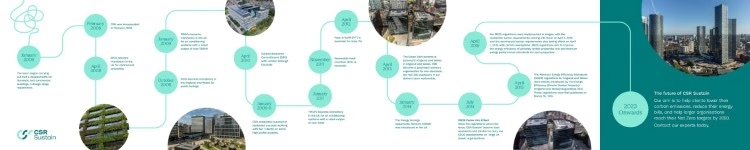
Since 2008, CSR Sustain have supported clients at every level of their building optimisation and performance, and alongside their network of trusted associates, they have provided over 26,500 audits, assessments and reports across all property sectors.

As they celebrate their 15-year company milestone, CSR Sustain’s Managing Director Gary Cleary, and Director Luke Cleary, look back on two decades of changing energy legislation and policies – and reveal what’s next for the company and the future of energy compliance.

After Part L SBEM and SAP calculations were introduced for new builds in the UK in 2006, to enhance energy efficiency and reduce carbon emissions aligned with the EU, the direction that energy performance reporting was headed became clear. Gary saw the demand for surveys in the commercial property sector, and established CSR Sustain in February 2008.

“I’ve seen a lot of energy policies and initiatives come and go over the last 15 years”, Gary said. “But I think it’s a testament to our team’s experience and expertise in energy compliance legislation that we’re still going strong today.”

“Guided by the dedication of our in-house team, Craig Kefford, our Senior Energy Assessor, and Michelle Booth, our Office Manager, have been integral to CSR Sustain since its inception.” Gary noted. “Together, along with our network of associates spanning the UK, including Scotland and Wales, ensuring comprehensive and steadfast support for our clients’ energy compliance needs.”

London

By April 2008, Gary’s team of specialist construction and engineering experts had completed their NDEA qualifications – just in time to see Energy Performance Certificates (EPCs) become mandatory in the UK for the first time, introduced as part of the implementation of the European Union’s Energy Performance of Buildings Directive (EPBD).

Over the next nine months, the team saw Display Energy Certificates (DECs) become mandatory in England and Wales for public buildings, and TM44s first became mandatory in the UK for air conditioning systems – which led to CSR Sustain benchmarking the operational performance of hundreds of private and public sector buildings, continuing to this day.

Between January 2009 and 2011, CSR Sustain completed high-profile projects including carrying out the non-domestic EPCs of all Transport for London (TFL) offices and regional centres across 100,000m2 of central London, plus the initial pilots with 17 of the 33 London Borough Councils as part of the UK’s Carbon Reduction Commitment (CRC) programme.

After the launch of the Renewable Heat Incentive (RHI) in November 2011, CSR Sustain partnered with renewable technology contractors, and helped deliver Ofgem RHI grant applications – before supporting Ofgem with further grant applications for renewable electricity generation following the launch of Feed in Tariff (FIT) for solar PV in April 2012.

And when the Green Deal scheme launched in England and Wales a year later, allowing homeowners to finance energy-efficient improvements based on their EPC recommendations, CSR Sustain’s nationwide network of 365 assessors conducted and delivered circa 2,500 RHI applications for solar thermal and ground source heat pump grants & Green Deal reports to enable applicants to claim grants for renewable technologies like heat pumps, and solar thermal and solar PV panels.

“Even though the assessments were scrapped after a couple of years”, Gary noted, “the Green Deal scheme ushered in a wave of environmentally conscious initiatives through all sorts of governing bodies. We realised early on that helping our clients reduce their carbon footprint not only reduced their operational costs, but also paved the way to Net Zero.

The future of CSR Sustain


One of the biggest changes in energy legislation was the introduction of Minimum Energy Efficiency Standards (MEES) in March 2015, meaning landlords in England and Wales could not legally grant a new lease or renew an existing lease for a property with an EPC rating below an “E”. With these new MEES targets impending, CSR Sustain began helping clients undertake strategic CAPEX funding to optimise their long-term costs.

By the time the MEES regulations were implemented in the commercial sector in April 2018, CSR Sustain were providing MEES consultancy to help large property portfolio stakeholders across the UK achieve even higher EPC ratings to maximise their energy efficiency.

Today, CSR Sustain remain independently run and continue to support asset performance for building tenants and client property portfolios. But their focus has now broadened to improving the operational performance of properties – and they provide a comprehensive suite of energy auditing services, and trusted insight and guidance, to help their clients optimise asset and operational performance across properties throughout the UK.

Luke Cleary - IEng MCIBSE


Their mission is bigger than ever too: to help clients lower their carbon emissions, reduce their energy bills, and help organisations reach their Net Zero targets by 2050.

“There’s only so many fossil fuels left in the world, so we need to look at renewables for the future and reduce CO2”, Gary added. And their latest hire, director Luke Cleary, demonstrates CSR Sustain’s commitment to this sustainable cause:

“I’m really excited to have joined CSR sustain. Over the years I have seen Gary navigate the fluctuating complexities of the energy compliance industry. Not only is it an honourable feat to succeed on a family legacy but also contribute towards the preservation of the environment.”

“I have a broad background ranging from engineering design, client-side project management, and building analytics. With this experience I believe I am positioned to advise our forward-thinking clients on the most appropriate action to optimise the operational performance and future-proof their property assets with strategic advice on long-term capital expenditure decisions.”

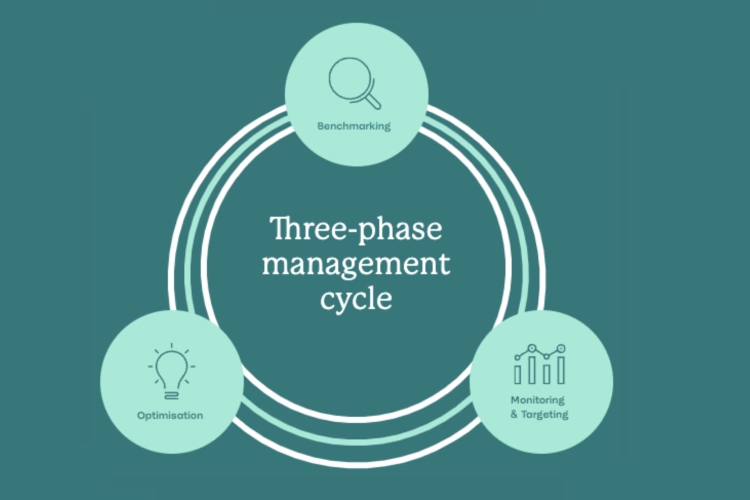
“By combining mine and Gary’s knowledge and experience in the energy auditing industry, we’re now launching a new suite of services to help property portfolio owners and tenants take control of their asset and operational building performance, and reduce energy use, through our circular three-step process.”

CSR Sustain’s three-phase management cycle – Benchmarking, Monitoring & Targeting, and Optimisation – takes a “holistic approach to energy efficiency”, and covers services from EPC certificates, building analytics, MEES solutions, energy audits and much more.

Three phase management cycle

“Once a property is optimised, we always go back to the Benchmarking phase to update the rating and find solutions to improve this further,” Luke continued. “By continually providing updated ratings and taking preventative measures to avoid energy drift, we can help clients achieve the best possible energy efficiency ratings for their properties.”

With over 15 years of company experience, and complete confidence in supporting their clients, both Gary and Luke see this milestone as a turning point for CSR Sustain – and they’re already looking ahead for the next wave of energy legislation.

Ready to unlock the true value of energy efficiency in your properties? Get in touch with the team at CSR Sustain today.

Protect your assets' value — start with a review

A short baseline review shows where your portfolio stands against MEES, where energy and carbon are being lost, and the highest-return actions to take first.

Book a building or portfolio review

Delivered with our technology and engineering partners